Plan Your Kitchen Storage Smarter
How much storage space a kitchen needs depends on who uses it, what needs to be stored there, and what daily habits are involved. For example, a household that shops for fresh groceries frequently needs less space for pantry items than a family that stores larger bulk purchases. Dishware, pots, kitchen appliances, and beverage supplies should also be taken into account during the planning process. Therefore, it’s not just the size of the kitchen that matters, but how well the available space is utilized. With thoughtful planning, cabinets, pull-out shelves, and interior organization can be coordinated so that everything has its place and remains easily accessible in everyday life.
The Most Important Points at a Glance
- Storage space requirements depend on household size and personal habits.
- You should take inventory of your food supplies, dishes, and kitchen appliances before you start planning.
- Cabinet height and ceiling height can create additional storage space.
- Pull-out drawers make it easier to see everything and access items.
- A well-thought-out interior layout makes efficient use of available space.
- Even small kitchens can offer plenty of storage space with the right planning.
How much storage space do you need in the kitchen?
The best way to determine how much storage space you need in your kitchen is to take stock of your belongings before you actually start planning the kitchen. Be sure to consider not only dishes, silverware, and pots, but also groceries, beverage supplies, and appliances such as food processors, blenders, or air fryers. Your shopping habits are just as important: If you buy larger quantities to stock up, you’ll need different solutions than someone who shops for fresh groceries frequently. Additional storage options also play a role. For example, if you have a pantry or a utility room, not all your supplies need to be stored directly in the kitchen. The more precisely you know your actual needs, the more effectively you can plan the available space.
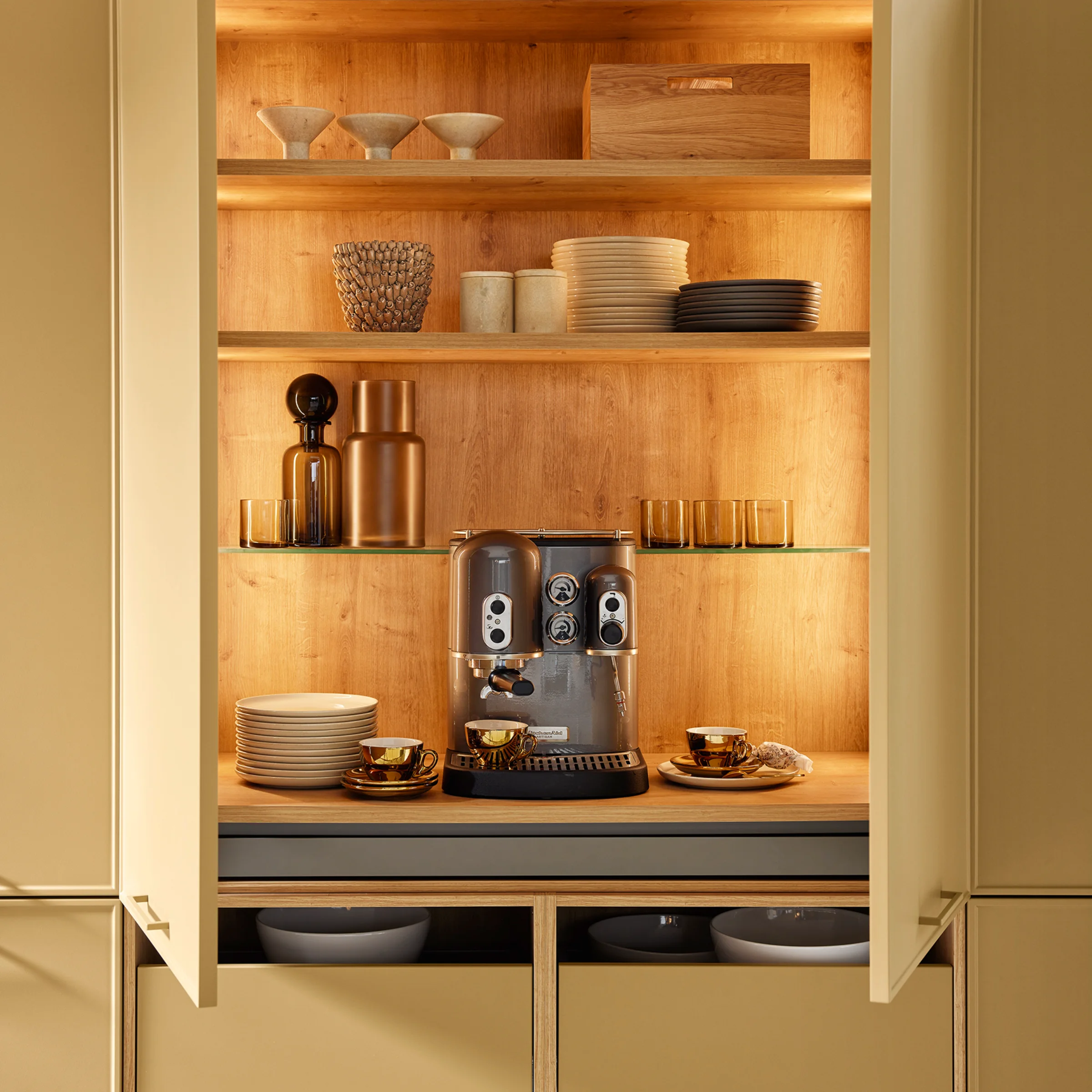
Checking Storage Space Before Planning Your Kitchen
- Groceries: Do you usually buy fresh or stock up?
- Dishes: How many people regularly use the kitchen?
- Cooking utensils: How many pots, pans, and kitchen tools do you need?
- Appliances: Which appliances should be within easy reach or stored in a cabinet?
- Beverages: Do you need to store bottles or crates of beverages?
- Additional storage space: Is there a pantry, basement, or utility room?
Our Tip
Before your planning appointment, take a good look at your current kitchen. What items are hard to find a place for? Which cabinets are overcrowded? And which storage spaces do you hardly ever use? This will make it easier to assess your actual needs.
How can you create more storage space in the kitchen?
You can create more storage space in the kitchen, especially when height, depth, and the interior of the cabinets are consistently factored into the design. Instead of simply planning for more cabinets, it’s worth making the most efficient use of the available space. Taller base and wall cabinets can provide additional storage without requiring more floor space in the kitchen. Pull-out shelves make it easier to access items stored further back, while internal drawers create additional storage levels. Depending on the design, extra-deep cabinets or base drawers can also tap into previously unused space. Which solutions make sense always depends on the floor plan, personal storage needs, and how the kitchen is used.
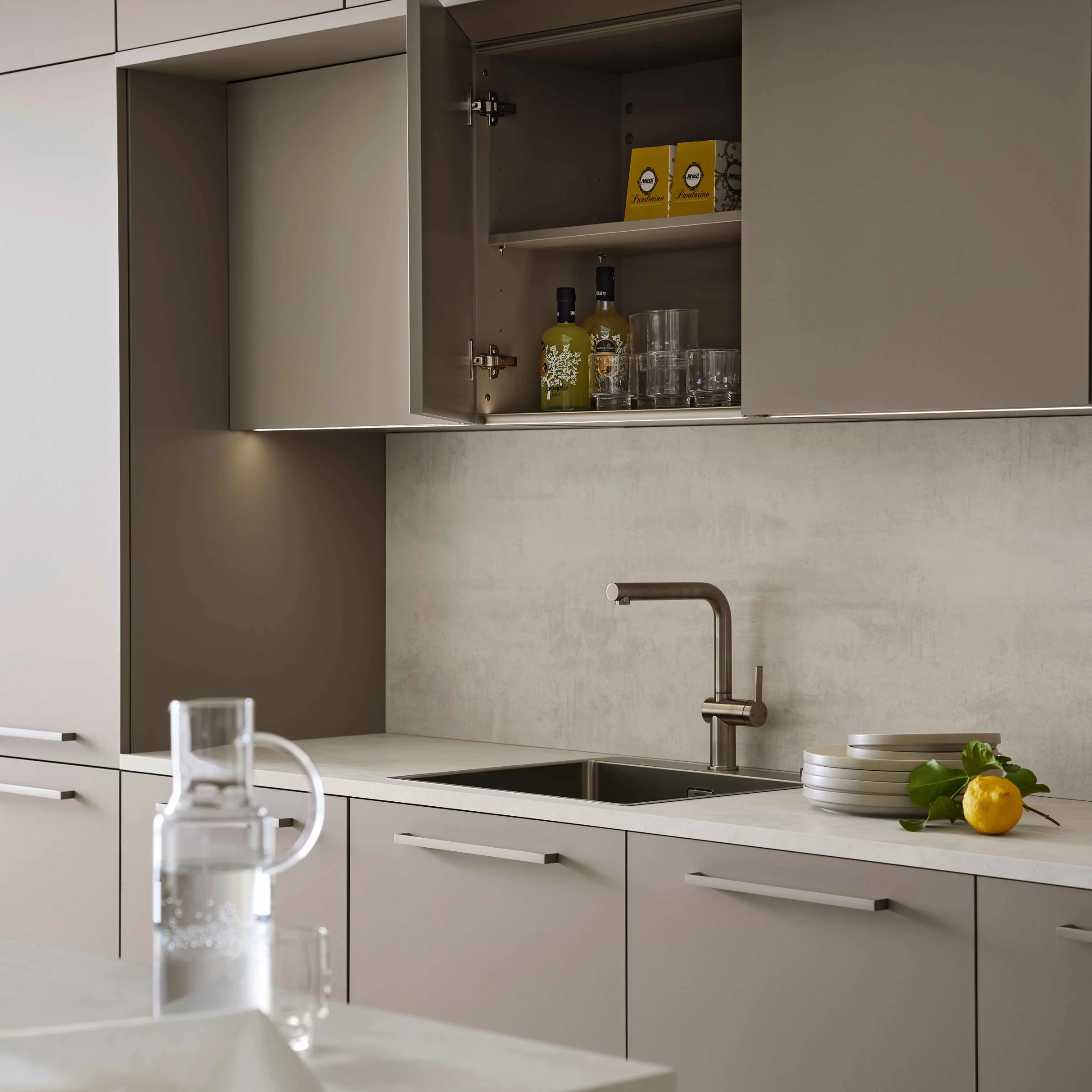
7 Ways to Create More Storage Space
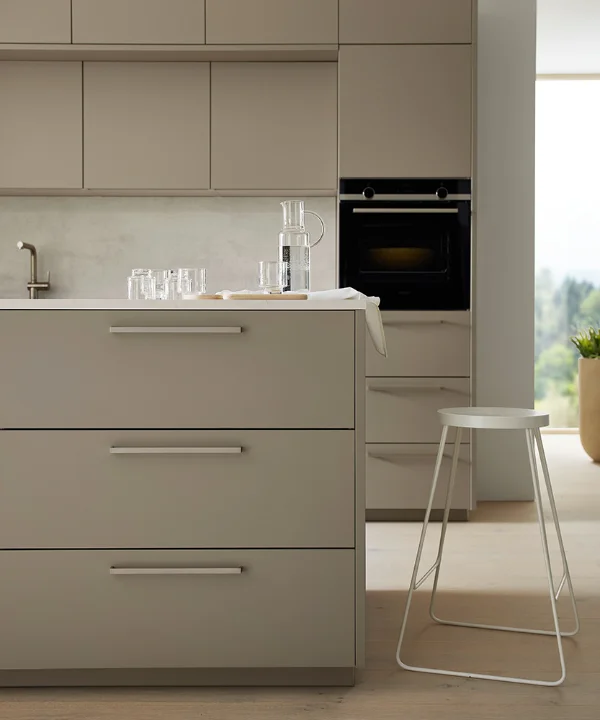
1. Choose the right cabinet height
With different cabinet heights, you can make the most of the available space. nolte Küchen offers three cabinet heights: Matrix750, Matrix800, and Matrix900. For example, with a cabinet height of 90 cm, the Matrix900 provides 20% more storage space than a 75-cm-high cabinet.
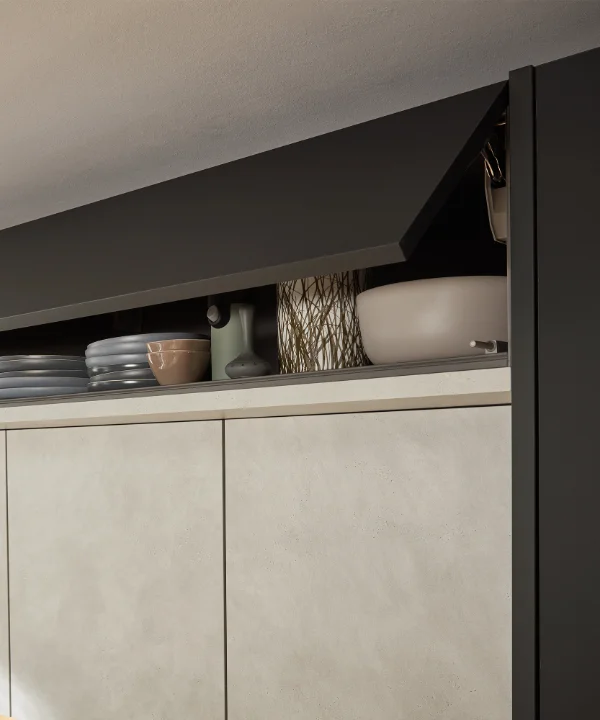
2. Make the most of the ceiling height
If you plan not only horizontally but also vertically, you can gain additional storage space. Items you rarely need can be stored in higher areas.
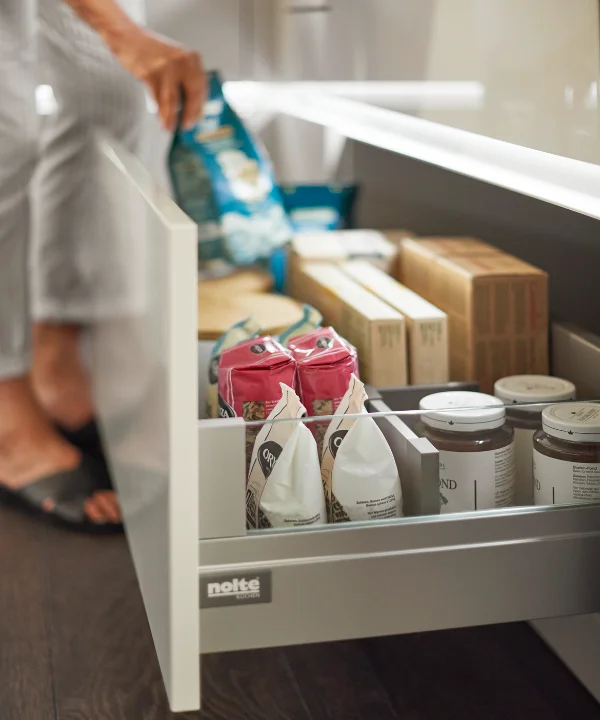
3. Use excerpts effectively
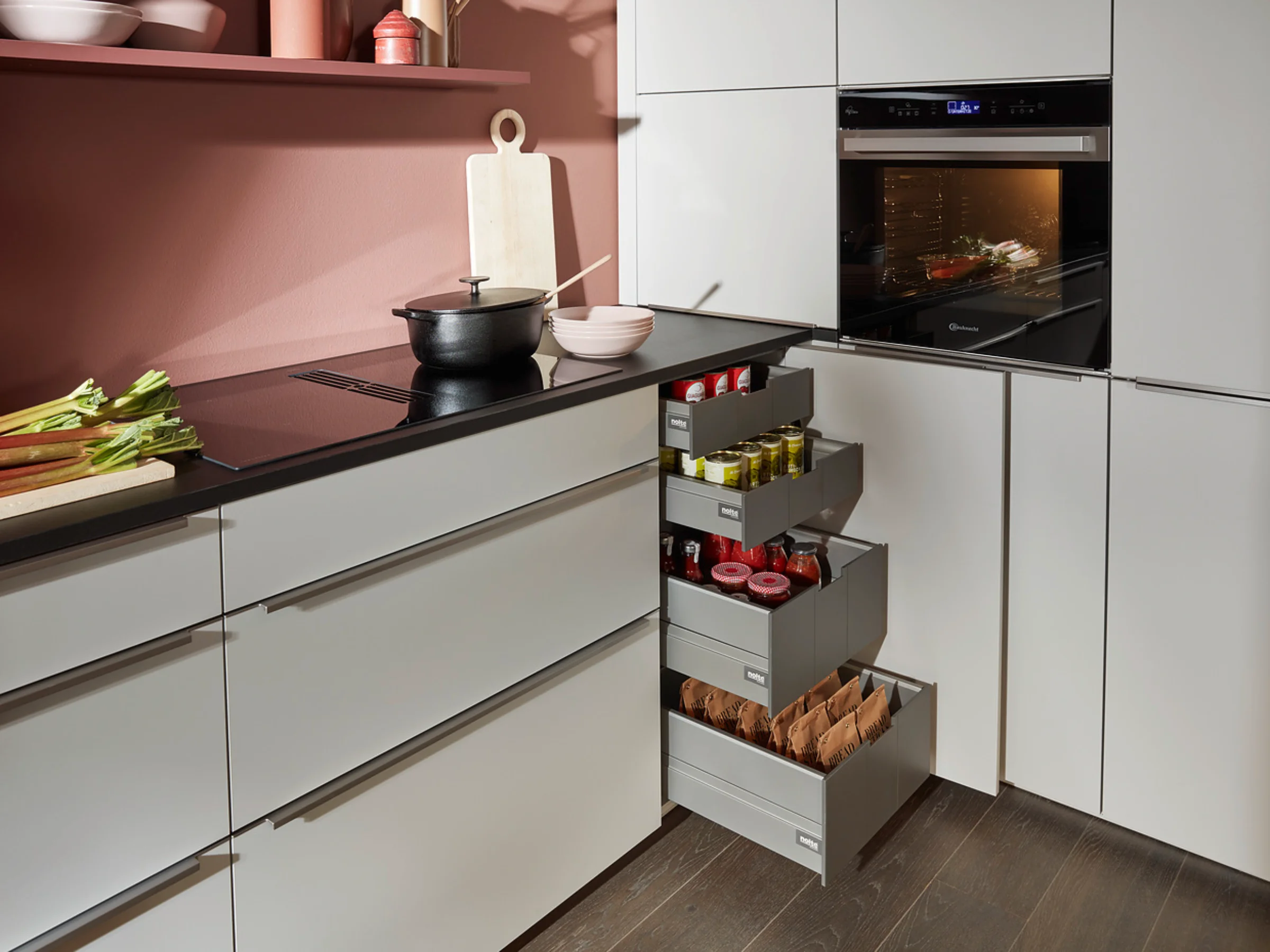
Pull-out shelves provide a good overview and make it easier to access items at the back. This allows for better use of the available depth.
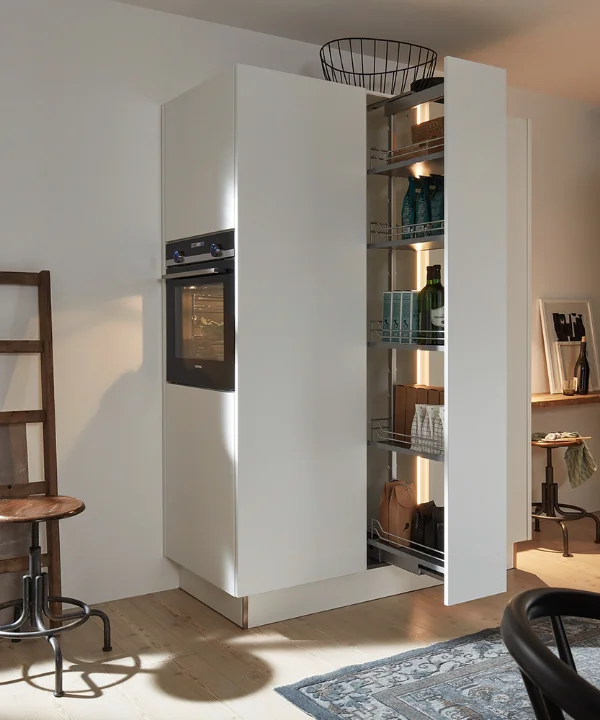
4. Store supplies in a compact way
Pantry cabinets and pull-out pantry cabinets provide plenty of storage space in a relatively small footprint and keep food items all in one place.
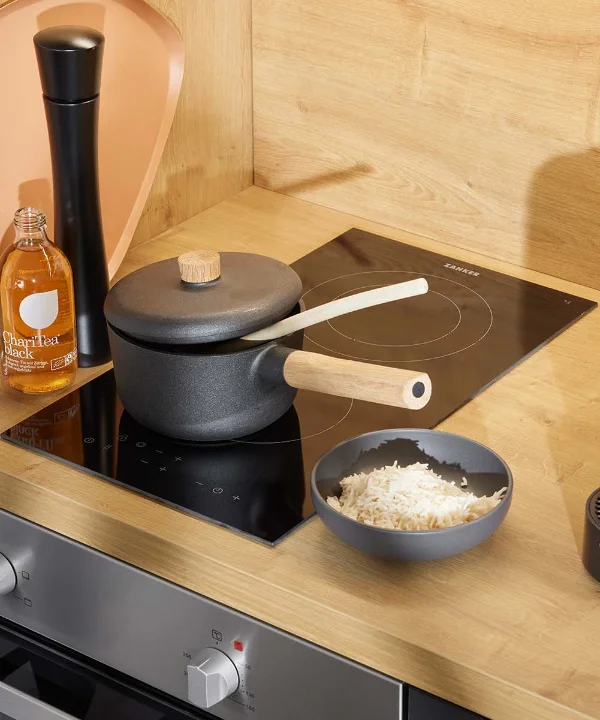
5. Check for additional cabinet depth
Where the floor plan allows, extra-deep cabinets can provide more storage space without having to add additional cabinets.
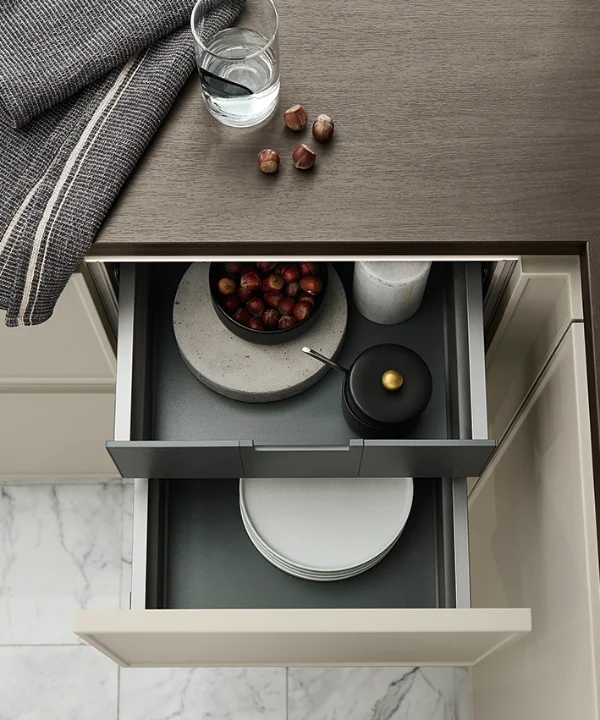
6. Use interior drawers
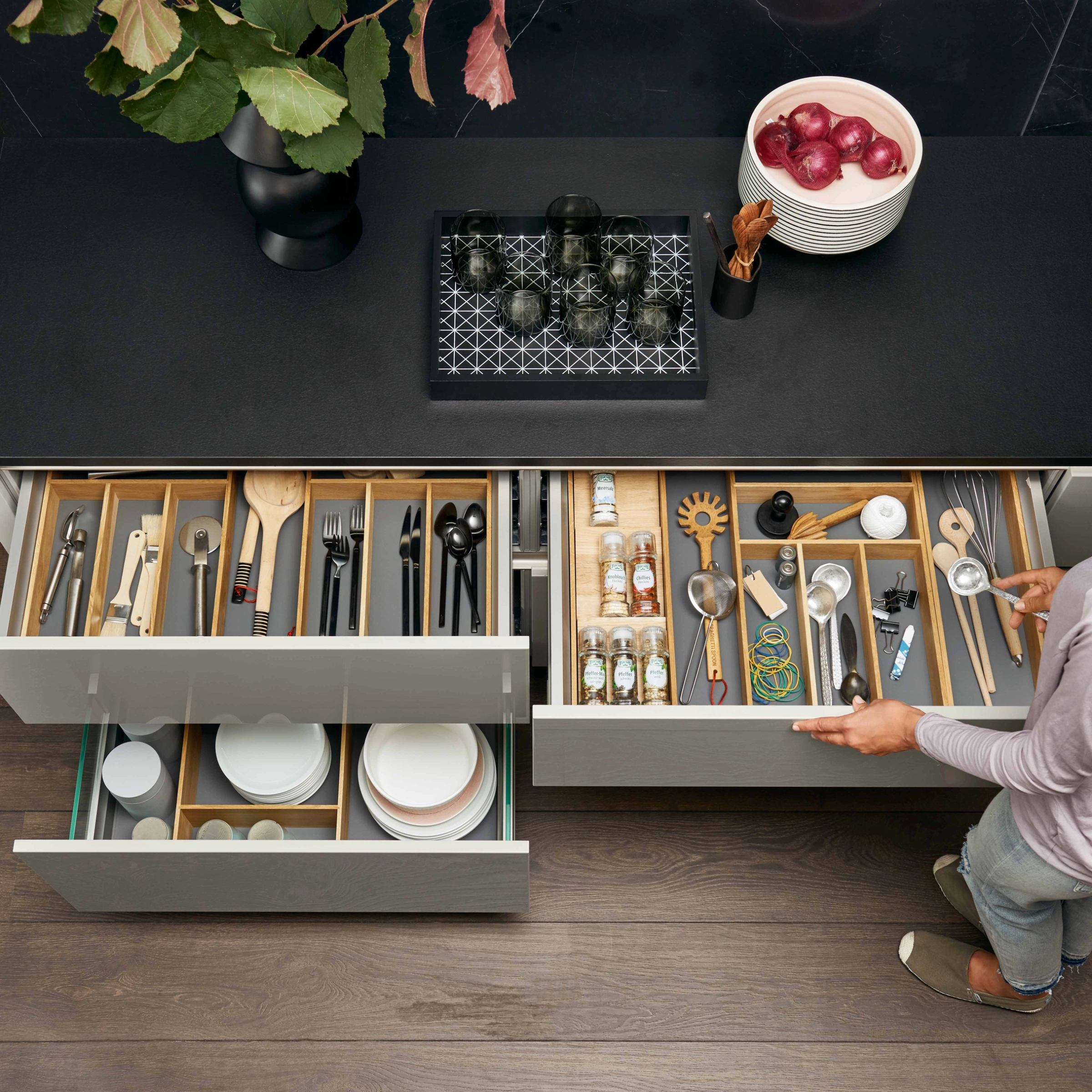
Interior drawers create additional levels inside a cabinet. This allows, for example, different kitchen utensils to be kept separate from one another in a space-saving way.
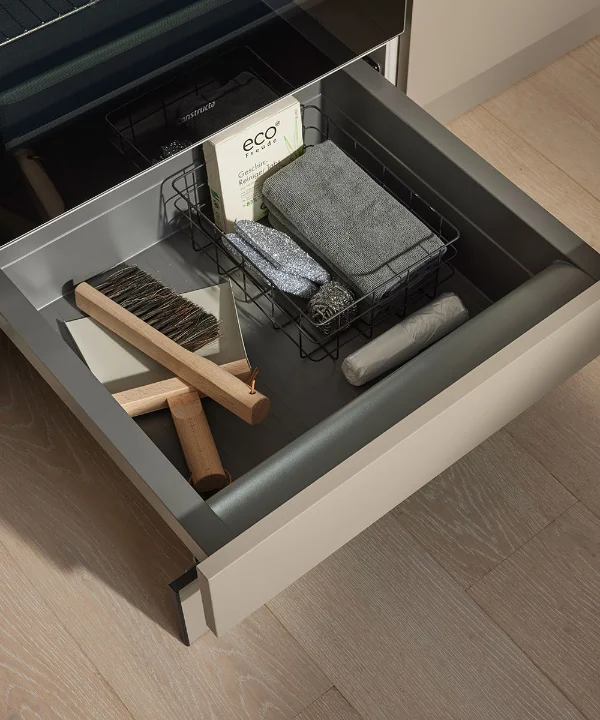
7. Don't forget the base
Depending on the kitchen layout, even the space underneath the cabinets can be put to use. Base drawers, for example, provide storage for smaller utensils.
What kind of storage space best suits your needs?
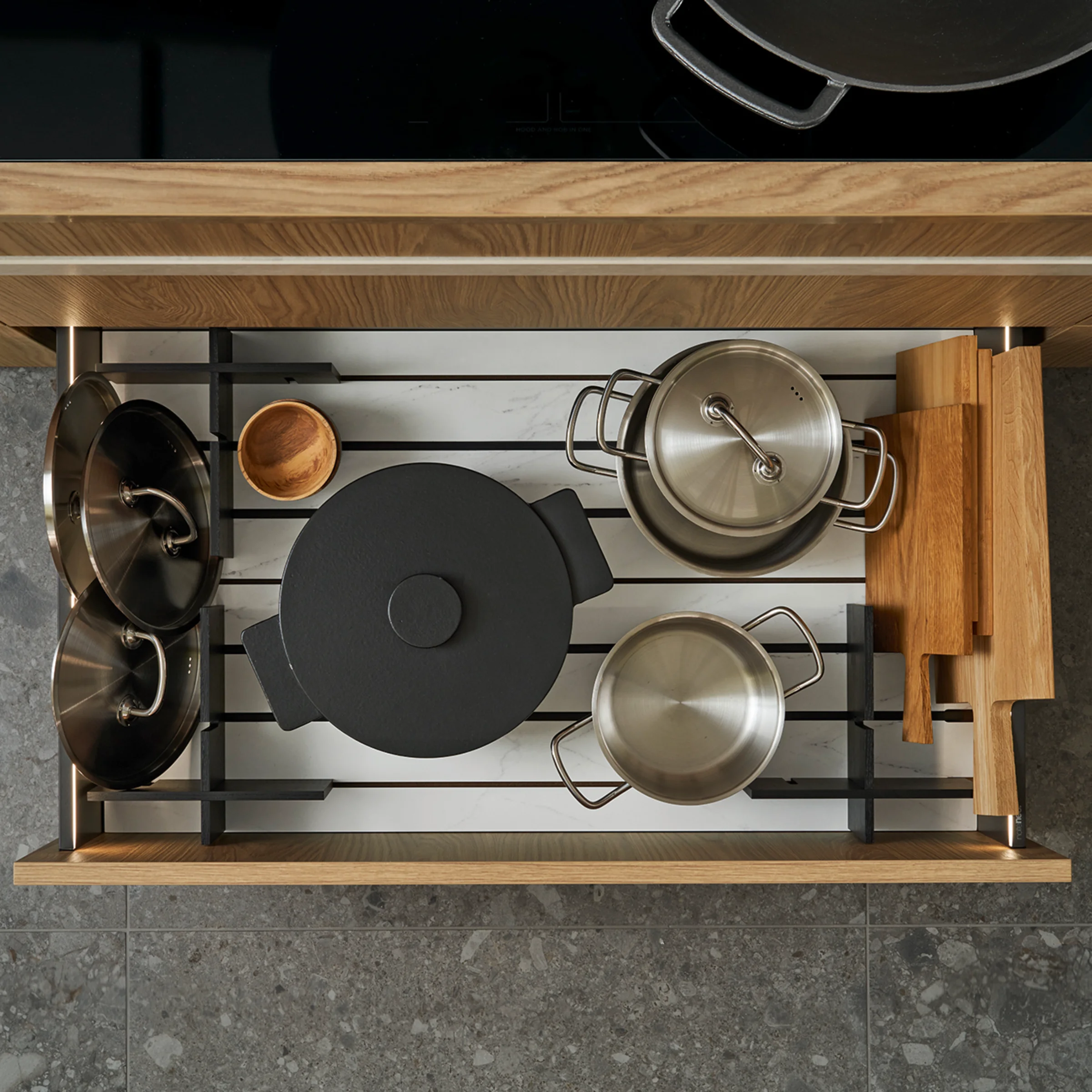
The right storage solution depends not only on the available space, but above all on what you want to store and how often you need to access it. For example, groceries can be stored centrally in a pantry, while pots and pans can be kept within easy reach in wide pull-out drawers near the stovetop. Cutlery and kitchen utensils, on the other hand, require less vertical space and can be neatly organized in drawers. Location is also crucial: frequently used items should be stored as close as possible to where they’re used. Effective storage planning therefore integrates cabinet type, interior organization, and workflow.
What would you like to store?
- Food and Supplies
- Pots and Pans
- Cutlery and kitchen gadgets
- Smaller Utensils
- Items used infrequently
- As much as possible in a small space
Appropriate Solution
- Pantry or Pull-Out Pantry Cabinet
- Wide, deep pull-out drawers
- Drawers
- Internal drawers and interior organization
- Upper cabinet sections
- Tall cabinets
nolte offers a wide range of other cabinet solutions to meet a variety of needs. Check out our detailed guide to learn about the different types of cabinets available and which solution is best suited for each purpose.
How can existing storage space be organized more effectively?
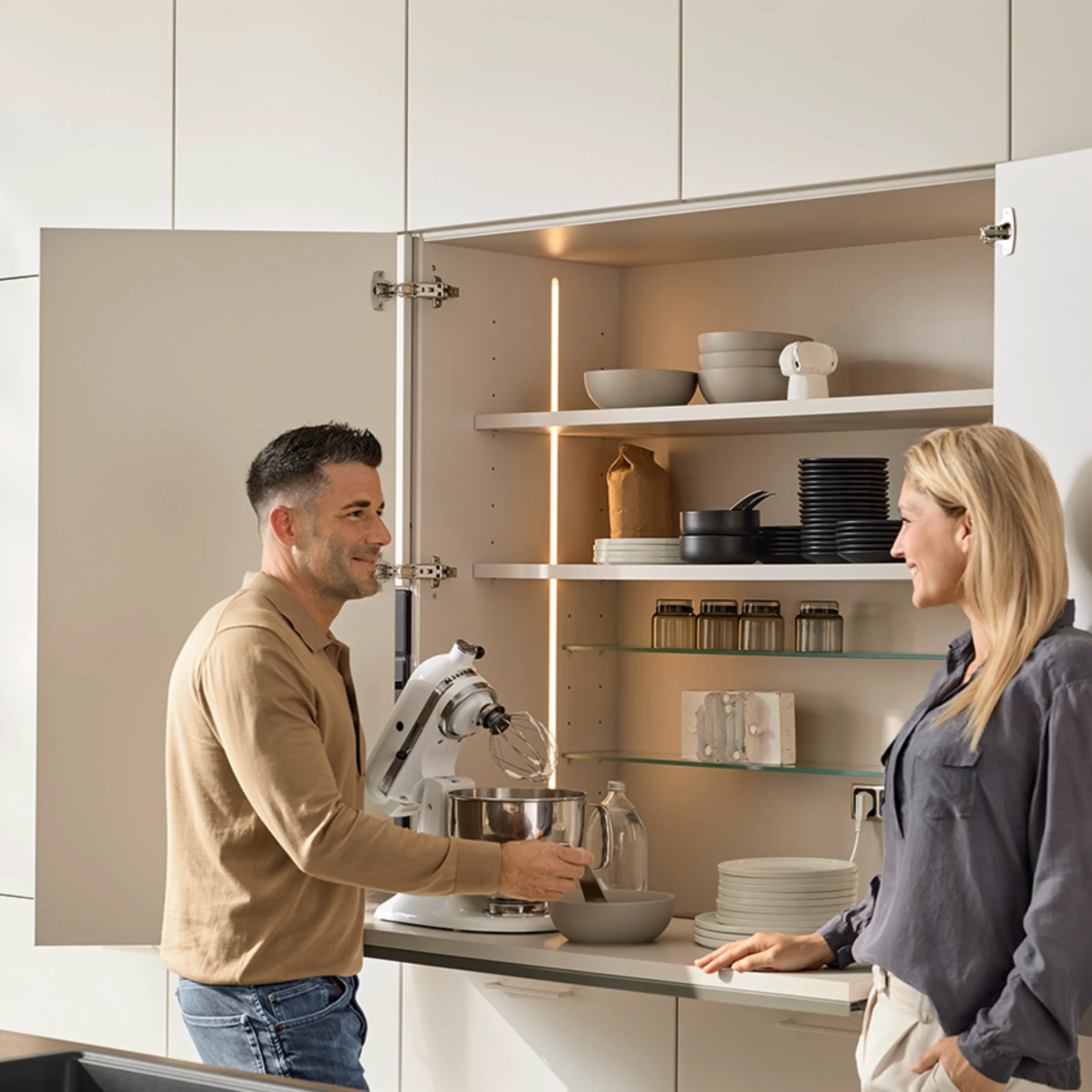
Existing storage space can be used more effectively when items are organized clearly and stored according to their intended use. Drawer inserts, boxes, and dividers for width and depth help keep different kitchen utensils separate and make the most of the available space. At the same time, frequently used items should be stored as close as possible to where they’re used: for example, pots and pans are best stored around the cooktop, while knives and cutting boards are within easy reach near the prep area. In this way, a well-thought-out interior organization not only keeps things tidy but also minimizes walking distances and ensures efficient workflows while cooking.

In short:
More storage space alone doesn't automatically make a kitchen more practical. The key is to organize the available space so that you can find everything quickly and reach it easily.
Order that extends down to the smallest detail
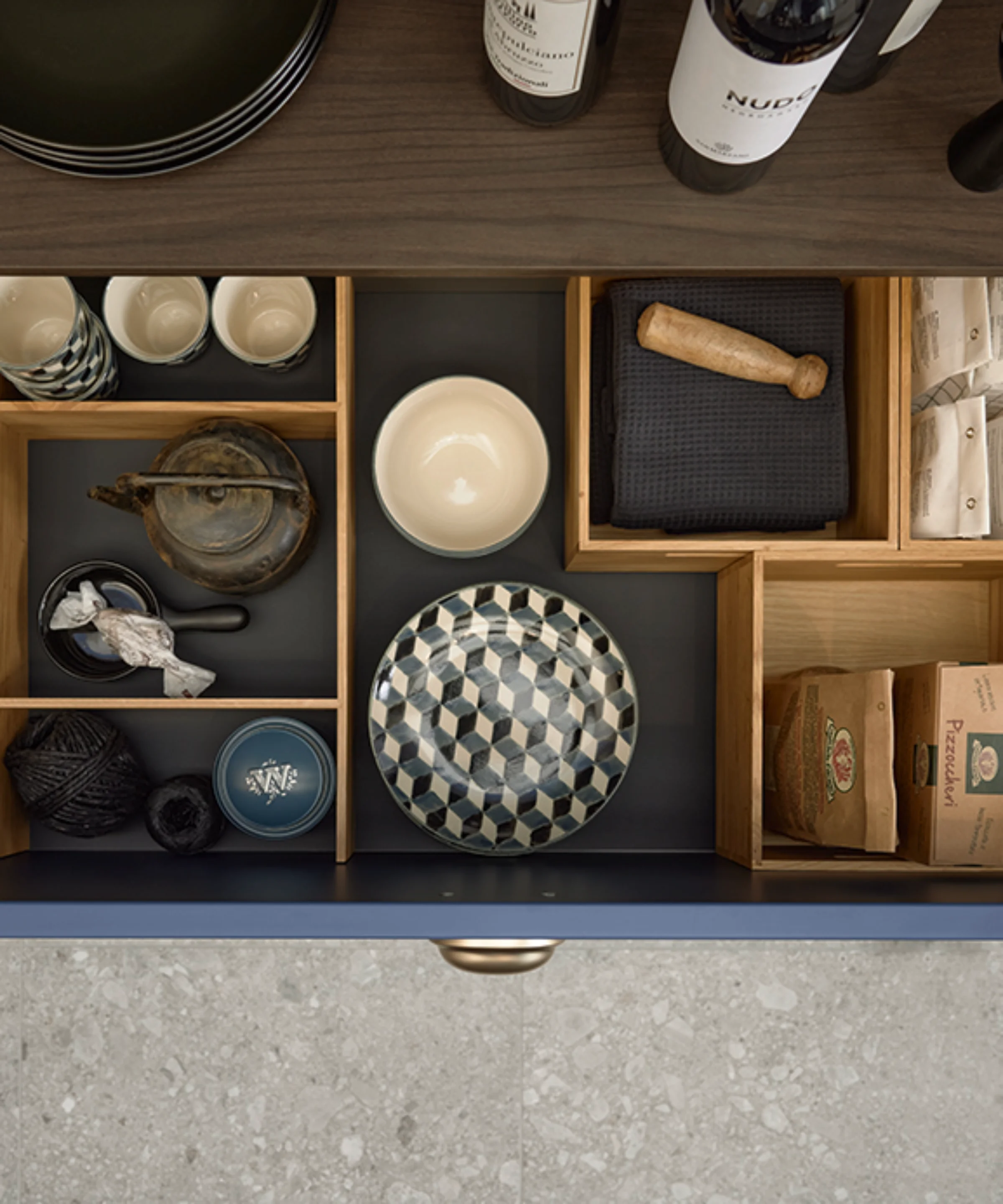
From cutlery trays to flexible drawer dividers: Discover the possibilities offered by nolte’s interior organization solutions and customize the storage space in your kitchen to suit your needs.


Small Places. Big Ideas.
How can you create more storage space in a small kitchen?
In a small kitchen, you can create more storage space by utilizing not only the floor space but the entire available space. Vertical planning is particularly important: tall cabinets and wall cabinets make use of the space above, while items used infrequently can be stored in higher areas. Depending on the floor plan, extra-deep cabinets can also provide additional space. Base drawers, in turn, open up an area that would otherwise often remain unused. At the same time, cabinets and pull-outs should be well-organized and easily accessible. This way, even a few square meters can provide enough space for groceries, dishes, and kitchen utensils.

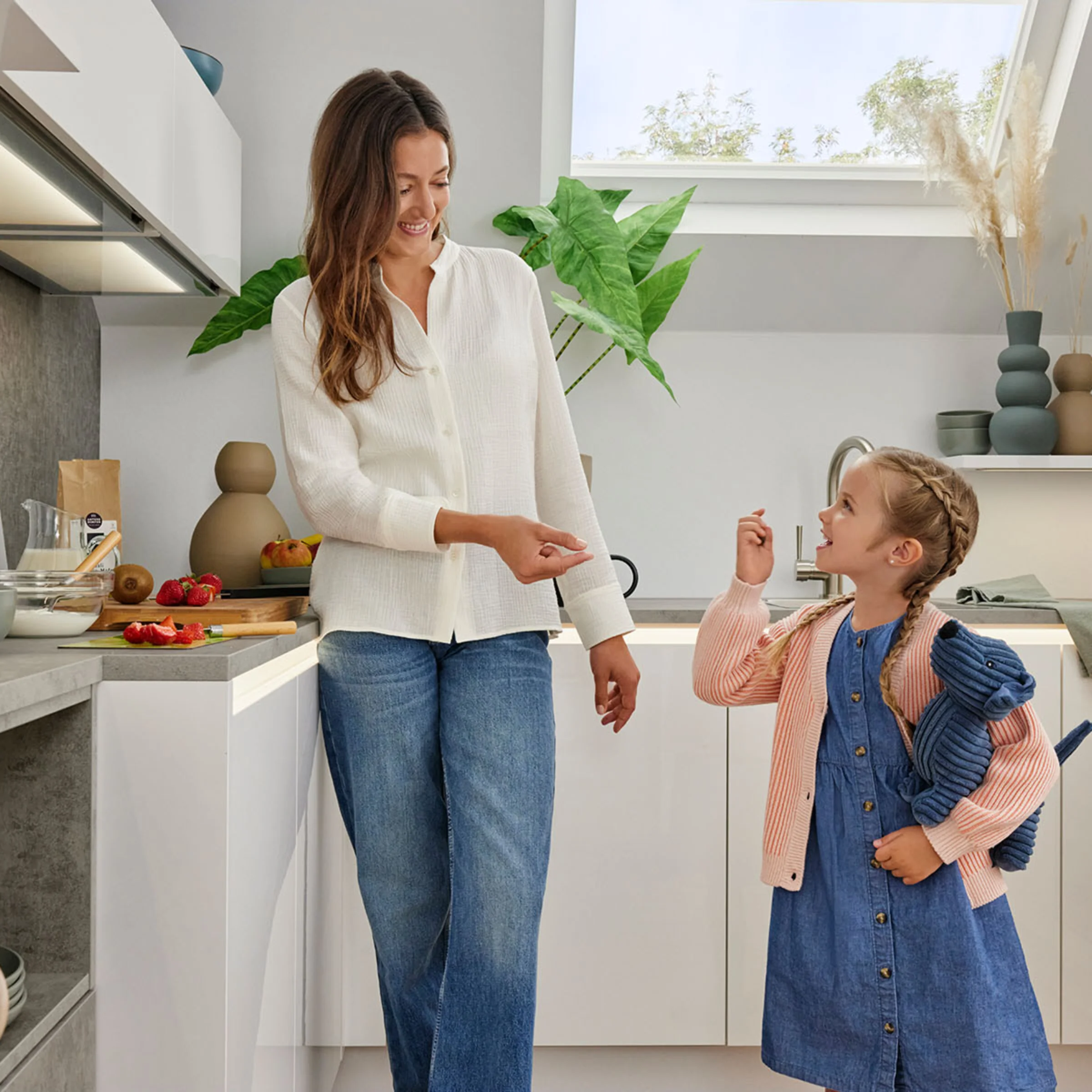
Tip for small kitchens:Don't just plan in square meters—think in cubic meters. Wall height, cabinet depth, and previously unused areas can create valuable storage space.
For small floor plans, nolte’s “Small Places – Big Ideas” offers additional ideas on how to combine functionality, storage, and comfort.
Does all storage space have to be right in the kitchen?
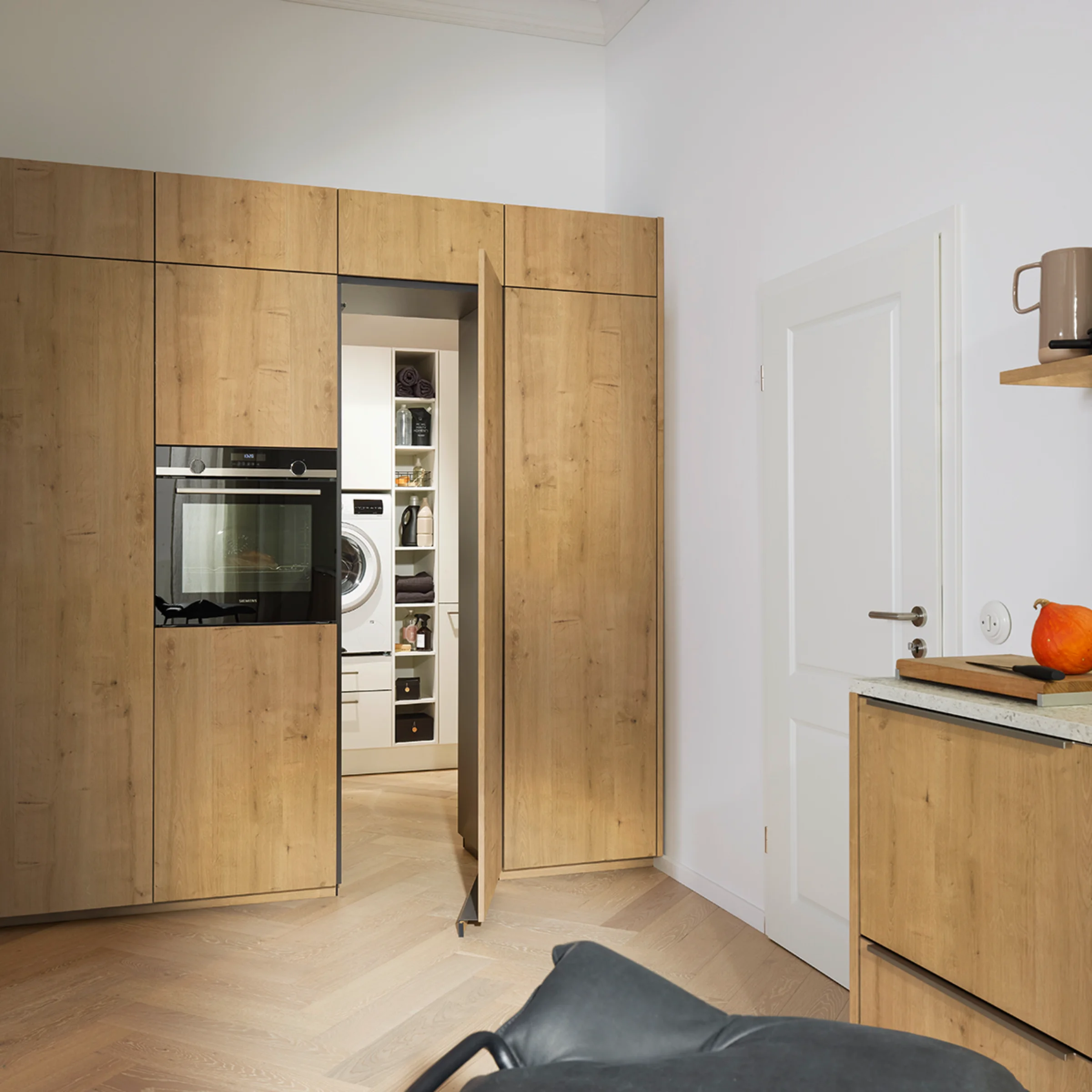
No, not everything used in everyday kitchen life necessarily has to be stored right in the kitchen. If you have a pantry, a basement, or a utility room, you can store larger supplies, cases of beverages, cleaning supplies, or rarely used appliances there, for example. That’s why it’s worth considering adjacent rooms right from the start when planning your kitchen. This can free up valuable storage space—especially when kitchen space is limited—and make it easier to store frequently used items conveniently within the kitchen itself. The key is a plan that doesn’t just focus on the individual room but sensibly connects the available storage options throughout the home.
What is particularly important when planning storage space?
Good storage planning isn’t about fitting in as many cabinets as possible, but about creating the right storage space in the right place. The starting point should always be your personal needs: Which supplies, appliances, and kitchen utensils require storage space? You can then decide which cabinet types, cabinet heights, and pull-outs make sense and how to make the most of the ceiling height. The internal organization and the positioning of the individual storage areas should also be considered early on. If you also incorporate adjacent rooms into the planning, you can make even more targeted use of the available space. The result is a kitchen that not only offers sufficient storage space but also fits into your daily life over the long term.


Planning Storage Space Properly: What You Should Keep in Mind
- Determine your actual storage needs.
- Take into account your pantry supplies, dishes, appliances, and kitchen utensils.
- Make good use of the room height and cabinet height.
- Plan for easily accessible pull-outs and drawers.
- Place frequently used items near where they’re used.
- Consider the interior organization from the start.
- If space is limited, explore the possibility of adding extra depth or utilizing previously unused areas.
- Include existing adjacent rooms in your storage planning.
Frequently Asked Questions About Kitchen Storage Space
Well-Planned Steps Toward a New Kitchen
Storage space is just one part of a well-thought-out kitchen design. In our brochure , “My Kitchen” you’ll find many more tips and practical planning resources to help you on your way to your new kitchen.